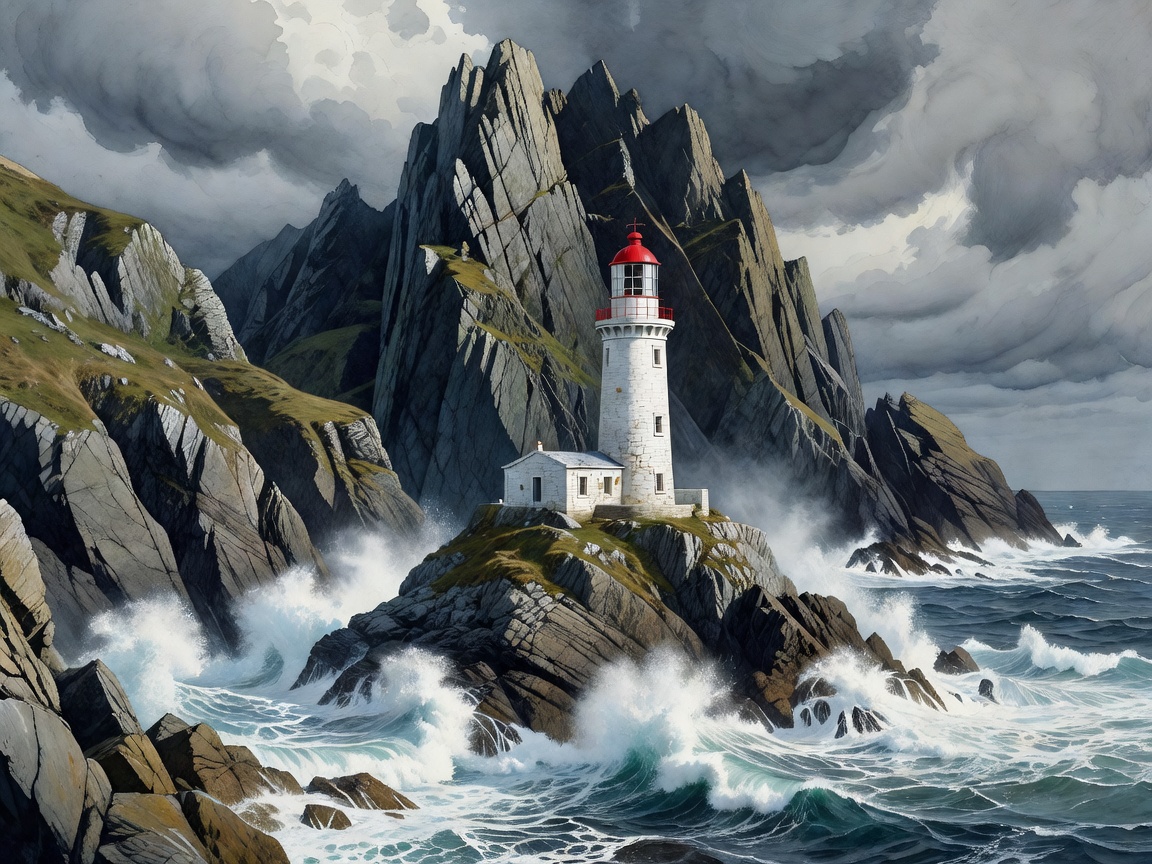
How is South Stack unlike a rock tower?
Eddystone, Bell Rock, Skerryvore and Fastnet place their main structures directly on offshore rocks. South Stack’s tower stands on a small island off Holy Island, with surrounding cliffs shaping the station. That means its foundation is not a reef exposed only at low tide, but it also means that access is constrained by a steep coastal landscape. Stairs, bridge connections and protected routes matter as much as the tower wall.
The distinction is practical. An offshore rock tower is largely a vertical answer to wave action and limited footprint. A cliff or island station can distribute buildings across available ground. The tower may be shorter and more conventional in section because the natural rock already provides elevation. But a high setting introduces its own demands: wind, salt spray, slope stability, drainage and safe movement between buildings.
Why does access belong in the design?
A lighthouse needs people and supplies, even after automation. In the staffed period, regular movement supported fuel, food, repairs and relief. At South Stack the route from the mainland is itself part of the station’s infrastructure. A bridge crosses the gap; a long stair connection descends through the cliff. This is not scenery attached to a building. It is the service route that makes a remote site workable.
Access design has to account for ordinary maintenance as well as exceptional repair. A route that can be used by a visitor may not suit heavy equipment. Conversely, a lifting operation may require temporary arrangements, weather windows and specialist planning. This is a useful warning against judging a station only from its tower. The most important engineering may sit underfoot or along the approach.
What was the role of the fog signal?
Light is less useful in fog, so many lighthouse stations historically used audible signals. South Stack is associated with this broader history of fog signalling. Horns, bells and later other apparatus required machinery, energy and maintenance, and their sound carried differently according to conditions and terrain. They were aids within a system, not magical solutions; mariners still had to navigate with caution and use every available source of information.
The move away from resident keepers changed the working environment around such equipment. A station no longer needs to support the same daily domestic routine, but it still needs inspection, safe access and resilience. Some historic buildings survive after their original operational role has changed. Their preservation value is real, yet their present treatment must be distinguished from the active navigational function.
| Site feature | Design consequence |
|---|---|
| Cliff-edge island | Natural elevation with difficult land access |
| Bridge and stairs | Essential service connection, not decoration |
| Fog-signal history | Additional machinery and maintenance beyond the lantern |
Where does Trinity House fit?
South Stack sits within the area served by Trinity House as general lighthouse authority. Its role concerns a network rather than one postcard view. The authority considers signals, reliable operation, maintenance and their relationship with other aids. For a reader, the important point is simple: a cliff station and an offshore rock tower may look very different, but each is judged by whether it helps a vessel understand a dangerous coast.